Printed fromJewishBellaire.com
ב"ה

Rabbi's Blog

Thoughts and Musings by Rabbi Yossi Zaklikofsky

Is there such a thing as “enough” charity?


American Jews are among the most charitable groups in the country, giving far beyond our small 2% of the population. It is one of the beautiful qualities of our community. And while Judaism certainly teaches concern for humanity as a whole, it also teaches that it comes only after our own community’s needs are taken care of.

This leads to a broader question: what actually motivates a person to give?

At the first and most basic level, a person gives because they are feeling generous today and want to do something good. There is certainly value in that. But naturally, the giving usually lasts only until one’s own emotional need is satisfied. Once the person feels they have “done something nice,” the motivation fades.

At a deeper level, a person gives because they are responding to a specific need. Someone is struggling. A school needs support. A family needs help. A community has to reach a goal. In this case, people often give far more than they originally planned, because they genuinely want to see the need addressed.

But then there is a higher level still. Those rare individuals in the community with an insatiable appetite for giving, not only because it feels good, and not only because there is a need, but because generosity becomes part of who they are. They stop viewing charity as a transaction and begin viewing it as a relationship with G d.

Often, we approach giving with endless calculations. We first need to determine exactly what amount feels fully comfortable, or we need to get permission from our financial advisor. Of course responsibility matters, and Judaism does not ask us to be reckless. But at the same time, a life of meaning can never be built only around comfort and calculation. Sometimes you need to go beyond and give it all you have got.

When it comes to our physical health, or the wellbeing of someone we love, we never say that we have spent enough. We go far beyond what feels convenient. Judaism asks us to see goodness the same way. To keep growing. To keep giving. To keep stretching ourselves beyond the comfort zone.

And, I have yet to meet someone who truly regretted the charity they gave.

Is your last holiday over yet?


Yesterday, a British friend told me he was going on holiday. Of course, he meant vacation. It struck me how differently that word is used. In America, a holiday usually means a special day on the calendar. In much of the world, a holiday means time away, time to recharge, time to reset.

But in truth, our Jewish holidays are both. They are sacred days to celebrate, but they are also meant to refresh us, educate us, and carry us forward long after the day itself has passed.

Just think about Passover. Nobody experiences Passover only on the night of the Seder. Weeks beforehand, homes are cleaned, food is prepared, plans are made, excitement builds. And afterward, its message is meant to remain with us: freedom from our limitations, and faith in G-d. Similarly, Shavuot, just a few weeks away, teaches us our mission and purpose in life. Rosh Hashanah calls us to reflection and renewal. Yom Kippur teaches us to return to our truest identity. Sukkot reminds us of joy in life, and trust in G-d.

Which brings us to today, the “Second Passover.” In Temple times, it gave a second chance to those who were unable to bring the Passover offering at the proper time a month earlier. But its message is timeless: it is never too late. We may miss an opportunity the first time, but it is never necessarily lost. There is always the ability to return, to repair, and to make it right.

The goal of a Jewish holiday is not just to celebrate it while it is here. It is to internalize its message so deeply that it influences the months before it, and the months after it as well, all year round.

A holiday is not meant to interrupt life. It is meant to elevate life. So perhaps the question is not only, “How will I observe the next holiday?” But also: “What part of it will still be with me when it is over?”

What comes first: Commitment or capability?


When we think about what makes a relationship work, we tend to point to compatibility, chemistry, or shared interests. But real life points to something deeper. The couples who last are not just the ones who “fit” well, but the ones who decide to stay. They approach marriage not as something they fall into, but as something they commit to. And that commitment itself creates strength, stability, and resilience. (Of course, every situation is different, and there are times when a relationship cannot or should not continue.)

That same idea appears in this week’s Torah portion in a surprising way. When it comes to the offering of the leper, one person can bring a sacrifice on behalf of another. Even someone of lesser means can step in for someone of greater means. Yet the Torah requires that the offering match the higher standard. It is not scaled down to fit the one bringing it.

Why obligate someone to bring something that seems beyond them?

Because commitment itself is transformative. When a person steps into a higher standard, when they take on something greater than what feels comfortable, something begins to shift. The commitment expands their capacity. It opens up new strengths and new possibilities that simply were not there before.

The Rebbe would often share a story of the Previous Rebbe, who once asked someone to underwrite a project that was far beyond his means. It seemed completely unrealistic. But the man accepted the commitment. And once he did, new channels opened, in ways he could never have anticipated, and he was ultimately able to fulfill it.

There is a powerful lesson here. So often we hesitate to step forward and commit, whether in a relationship, a new opportunity, a meaningful responsibility, or even to take on a new Mitzvah or Jewish observance, because we are not sure we are capable. But in truth, it often works the other way around. Capability follows commitment.

When we choose to commit, we grow into it. We become the kind of person who can carry what once felt beyond us.

So maybe the next step is not to wait until we feel ready. Maybe it is to make the commitment, open the door, and trust that G-d will give us the ability to rise to it. 

What’s your one non-negotiable?


We are coming off an uplifting Passover. I hope yours was filled with family, friends, tradition, and inspiration.

The question is, how do we take it with us into the days, weeks, and months ahead?

I am often moved, and sometimes pleasantly surprised, by conversations with people in our community who share how they hold onto one consistent Jewish practice, even if they would not identify as “religious.” One woman told me that every Friday, no matter what, she lights Shabbat candles and calls her boys over for a quiet moment of prayer together. Another shared that he never starts his day without putting on Tefillin. And another holds onto an aspect of keeping Kosher, come what may.

There is something deeply powerful about that one non-negotiable point of connection.

This week, the Torah discusses what makes produce susceptible to ritual impurity. As long as it remains even slightly attached to the ground, it cannot become impure. Only once it is fully detached does that vulnerability begin.

There is a profound message here. As long as we remain connected to our source, even in a small but real and consistent way, that connection preserves us. It keeps us spiritually alive and grounded in who we are.

So if there is one Mitzvah, one practice, one moment of connection that you hold onto, hold onto it tightly. It matters more than you may think. Over time, that one point of connection has a way of growing, naturally expanding into other areas of life.

You do not need to take on everything at once. Just stay connected. From that connection, small as it may seem, vitality flows into everything else. This is how the inspiration of Passover lives on, carried into the days ahead and into the summer months, becoming part of our daily rhythm.

Are you noticing the miracles?


We often move through life looking back at how things worked out and assuming that it was simply how it was meant to be. Our child got into the right school, a job opportunity came through, the flight took off and landed on time. It all feels natural, almost automatic, as if this was the expected outcome all along, the result of our effort and planning.

But what else is also happening?

This Shabbat is known as Shabbat HaGadol - the ‘Great Shabbat’, named for a remarkable miracle that took place just days before the Jewish people left Egypt. They were commanded to set aside a lamb for a sacrifice, an act that directly challenged the Egyptian deity. When the Egyptians noticed, they questioned the Jews and were told plainly that in four days a final plague would strike, the death of the firstborn. Faced with this, the Egyptian firstborn went to their leaders demanding that the Jews be freed. When they refused, a civil war broke out, Egyptians against Egyptians.

What is striking is that this miracle did not come with thunder or spectacle. It unfolded through what looked like a natural chain of events: fear, pressure, conflict. And yet beneath the surface, something extraordinary was happening. Nature itself was shifting in favor of the Jewish people. The tide was turning.

This Shabbat we are invited to see our own lives through that same lens. What we often call “natural outcomes” may in fact be a steady flow of hidden miracles, so woven into the fabric of daily life that we barely notice them. If we paused to pay attention, we might realize that we are living through blessings we once prayed for.

This Sunday is the 11th day of Nissan, the 124th birthday of the Lubavitcher Rebbe. He lived with the clarity that no day is ordinary. Each day carries its own energy, its own opportunity, its own quiet miracles waiting to be recognized. With a bit more awareness, we can begin to see them.

On a broader level, we are witnessing surprising shifts in the world around us, moments when those once seen as adversaries are now, even if quietly, aligning in the fight against forces that threaten Israel and the Jewish people. These developments remind us that what appears to be natural or political may in fact be part of a larger unfolding.

As we prepare for the Seders next week, let us use this season to recognize the many blessings in our lives not as routine, but as remarkable.

Can we ever write off another Jew?


Right now, our brothers and sisters in Israel are facing extraordinary challenges. Our prayers are with those who have lost loved ones and with the many who are injured. Meanwhile, much of the population is running to shelters multiple times each night, bringing children and elderly loved ones to safety from relentless attacks. And yet, amidst it all, something remarkable is happening. Daily miracles reveal the hand of G‑d guiding, protecting, and sustaining the Jewish people, reminding us that even in the darkest times, His providence is real and alive.

After a class last week, a conversation came up about a phenomenon we all know too well: our own Jewish brothers and sisters taking surprising positions on Israel. “I can’t believe any Jew would be against the current war on Iran,” someone said. Another added, “And those Jews in New York who voted for Mamdani, are they even Jewish anymore?”

Of course, similar accusations come from every direction, left and right alike, as people struggle with the shock that another Jew might take a stance we consider dangerous to millions of Jewish lives. The temptation to write off anyone whose views clash sharply with our own can be strong.

This week, the Torah offers a subtle but powerful lesson. In the context of offerings brought after a sin committed by a large segment of the community, the Torah does not overemphasize the gravity of the wrongdoing. The offering is described in a way that does not dwell on the negative, without amplifying the failure. Our sages explain that this teaches us how far G‑d’s love extends: even when His beloved children make mistakes, He helps them remedy the situation appropriately, without dwelling on their mistake.

We can take a cue from this divine example. If every Jew is one of G‑d’s beloved children, then each of them is our brother or sister. We may disagree, we may view someone as misguided, and we may seek to educate or guide them back to the right path, but we never write them off.

Every Jew, regardless of how far they may stray, remains a child of G‑d, deserving of respect, patience, and love.

Do you actually feel at home in Synagogue?


This week I spoke with two people in our community I hadn’t seen in a long time. Both shared the same observation: they have never felt as strongly Jewish as they do right now, even as Jews face attacks, verbal and physical.

Their awakening is inspiring, but it also highlights a challenge. Many want to reconnect, to feel the warmth of community, yet without basic knowledge and experience, it can feel intimidating. Walking into a synagogue service, a Judaism class, or a community event can feel unfamiliar, uncomfortable, or even overwhelming.

Some parents are cautious about exposing their children to anything “too Jewish” in the hope they will choose their own path as adults. Without a foundation of basic training, that choice often leads to minimal engagement later in life. We can fall into the same trap ourselves, hesitating to pursue knowledge until “later” and unconsciously passing that hesitation on. With even a little familiarity, the synagogue, a class, or community event can become a space of connection and joy, life-enriching, relevant, and uplifting, turning what once felt unfamiliar into experiences that inspire and strengthen.

This week we read about the seven days of preparation before the inauguration of the Mishkan, on the first of Nissan. For a full week, the Mishkan functioned unofficially, so that on the eighth day, the services could be performed flawlessly. Even for the holiest service imaginable, preparation and learning was essential.

The Passover Haggadah makes the same point. Among the four children, the most challenging is not the rebellious one, but the one “who does not know how to ask.” Ignorance, more than opposition, is the greatest obstacle. A foundation of knowledge allows a person to participate fully, engage confidently, and be inspired when the moment calls.

Basic Jewish training is not about knowing everything. It’s about building familiarity and confidence. It allows us, and our children, to step forward into Jewish life with courage, to feel comfortable in a synagogue, and to continue growing from there, wherever their journey may take them.

Take the first step. Sign up for a class, attend a service, or explore a community event. Even a small step can open the door to new experiences and deeper connection. And if you’d like guidance along the way, Esty and I would be delighted to discuss options that suit you personally.

Does Chabad Really Want to Build the Temple?


Life sometimes hits hard, plans fall apart, things go wrong, and it feels like everything is breaking. And yet, those very moments often create the space for unexpected blessings and growth we weren’t ready for before.

One such dramatic moment occurs when Moshe descends from Mount Sinai and sees the Jewish people worshipping the Golden Calf. In response, he shatters the tablets that contained the commandments given by G-d.

At first glance, this seems like a tragic act. Yet our sages tell us something surprising. Not only did G-d not rebuke Moshe for breaking the tablets, He affirmed his action and even gave him a “Yasher Koach.” G-d then reassured him: Do not worry about what was shattered, the second tablets will contain even more Torah than the first.

Why was it necessary for the first tablets to be broken in order for the second to be given? Could they not simply have been set aside?

The deeper message is that sometimes a greater light can only enter after a breaking point. When something shatters, space is created. Old assumptions fall away. Ego softens. In that openness, something deeper and more enduring can take root.

This is true in our own lives as well. The broken pieces of our experiences can become the vessels that hold our greatest blessings, making room for growth, clarity, and purpose we were not yet ready to receive before.

In recent days the internet has once again filled with hateful and absurd accusations against Jews, this time claiming that Chabad are somehow behind the war with Iran. Being the target of such baseless hostility never feels good.

But perhaps we can transform this darkness into a catalyst for greater light. Let it push us to deepen our pride, strengthen our Jewish life, and bring even more Torah and Mitzvot into the world.

For the record, Jewish tradition teaches that the Temple in Jerusalem will be rebuilt only in the era of Moshiach, at the time that G-d determines. We can hasten that day through acts of goodness and kindness.

The only “temple project” we can begin today is much closer to home: building a vibrant Chabad center for The Shul in our community.

If you would like to be part of that, I would be honored to speak with you.

Hidden, Yet Everywhere


Have you ever noticed someone so consistently present - at Shul, at work, or the gym - that you barely notice them, until one day they are gone? Their absence suddenly makes you aware of how much they shaped your routine, how deeply their presence was woven into the background of your life.

For the only time since Moses was introduced, his name is completely absent from our Parsha. Week after week, he is central to the story, and then, suddenly, he is gone.

But is he really gone?

In truth, the Parsha still reflects him, his role and influence. Only his name is missing. This teaches us that true presence is not measured by how often someone is mentioned, but by the lasting imprint they leave, the way their actions, guidance, and influence continue to shape the world.

Purim offers a parallel. In the Megillah, God’s name never appears, yet His presence is everywhere. At first glance, the story seems natural, even coincidental. But when we look closer, we see an intricate orchestration, a chain of events so precise that salvation appears miraculous yet fully embedded within the natural world. Hidden, yet profoundly present, guiding every turn toward redemption.

Yesterday our family marked the Shloshim of my mother. In a similar vein, we come to terms with the painful reality that her physical presence is no longer with us, but her true presence has never been clearer. Her spirit, her guidance, her encouragement, these remain woven into our daily lives. Just as Moshe’s name can be absent yet his influence endures, her essence surrounds us, comforts us, and inspires us to live fully and meaningfully.

Sometimes what is unseen reveals itself more powerfully than what is before our eyes.

Is 'Good Enough' Good Enough?


Anyone who has ever planned a wedding, renovated a home, or hosted an important gathering knows that the details take the most time. The lighting, the table settings, the finishing touches. On paper they may seem secondary, but in reality they shape the entire experience. They signal what we value.

This week we begin studying the construction of the Tabernacle (Mishkan) in extraordinary detail. Vessel by vessel, clasp by clasp, layer by layer. Among those layers was the outermost covering, fashioned from the skin of the Tachash, a rare and uniquely multicolored creature that no longer exists. It was beautiful and intrinsically vibrant. Not dyed. Not artificially enhanced. Its beauty was woven into its very being.

Why such extravagance for what seems like a mere detail?

Because when building a home for the Divine Presence, nothing was incidental. Every element mattered. Every layer was intentional. The Mishkan was not constructed with a hierarchy of ‘this is essential’ and ‘this is good enough.’ Holiness was expressed through attention, care and dignity in every part.

That idea gently challenges us. In life, we naturally prioritize. We make sure to show up for what feels central and foundational, and that is healthy. But the Mishkan reminds us that Judaism is not only about the pillars, it is also about the details that surround them.

The details are what transform a structure into something alive. They create atmosphere. They communicate value.

Jewish life works the same way. The way the Shabbat table is set. The melody with which we recite Kiddush. A family custom carried forward. A Mezuzah placed with care. A ‘smaller’ holiday acknowledged instead of overlooked. A few extra minutes added to candle lighting or to wrapping tefillin.

Individually, these may seem small. Collectively, they reflect our priorities. They leave impressions, especially on our children, about what matters and what is cherished. Often, it is precisely the details that carry memory from one generation to the next.

The Mishkan teaches us that holiness is cultivated through attention. Through the quiet decision that even what sits ‘on the outside,’ even what seems secondary, deserves dignity.

Because when something is sacred to us, we do not do it minimally. We do it meaningfully.

Are You Giving Your Whole Half?


We often use the phrase 'better half' to describe a spouse. It suggests something beautiful, that none of us is meant to stand alone. That we are each only part of something larger.

There is a once-a-year Mitzvah we read about this Shabbat: the giving of the half-shekel coin that supported the services in the Temple. What is striking is that the Torah requires precisely half a shekel, not more and not less. The Mitzvah is intentionally about being half.

Yet at the same time, the gift had to be given all at once. There were no installments, no partial payments. One could not give a quarter now and a quarter later. It had to be a complete act, in one motion, in one commitment.

Which feels almost counterintuitive. We give only half, yet we must give it entirely at once. Why?

Because the purpose of this contribution was not merely to raise funds. It was to cultivate our awareness that we are only half the story. We are not self-contained beings. We are dependent on something greater, on G-d, our Creator, who is, in the deepest sense, our 'better half.'

The half-shekel teaches humility: I am not whole on my own. But the manner of giving taught something equally powerful: even if what I bring is only half, it must be given wholly. The coin itself was small. It was not meant to impress. What mattered was that it was given completely.

In reflecting further on my mother’s life, I realize how remarkably she embodied this idea. Many of us are incredibly devoted to our loved ones, to our community, or to our Judaism, but we still reserve a small corner for ourselves. Some time off. A little 'me time,' where we step away from all of the above.

But not my mother. She gave her coin completely. She was devoted to my father, to her children, and to G-d, fully and unconditionally. There was no part of her that she held back.

May I learn from her example to give my half that same way, as a Jew, as a husband, as a father, and as a rabbi - all in.

Reflections After the Loss of My Mother


Just one week earlier, our entire family was together in New York celebrating the wedding of my niece Mussia. My mother was there in her usual vibrant way: present, smiling, dancing and fully engaged. Knowing that our last time together was such a joyous occasion is something we will forever carry as a true blessing.

Last Shabbat was deeply moving. I was together with all my siblings, along with many nieces and nephews, and we spent hours, quite literally through the night, sharing memories, ref lections, and life lessons about Bubby Z. With several of my siblings now serving as rabbis, it had been many years since we spent an entire Shabbat all together. Seeing her grandchildren emerging into thoughtful, impressive young men and women was deeply gratifying and a source of real comfort.

My mother did not have an easy journey. She was born in Germany in a DP camp, emigrated to Milwaukee, and lost her own mother at the young age of seventeen. She later moved to New York, started a family, and eventually settled in suburban Detroit, where I grew up. She was blessed with nine children, yet she also endured profound loss, with the passing of a one-year-old baby, Shneur Zalman a”h, a pain no parent ever truly outgrows.

Among her children was also my brother Dovid a”h, who had Down syndrome. While many parents eventually experience a stage of life when caregiving responsibilities ease, that moment never truly came for my mother. She continued to care for Dovid throughout his adulthood with extraordinary devotion and selflessness, day in and day out, like a true Eim b’Yisrael, a mother in Israel.

And yet, remarkably, she never complained. She lived with deep faith and trust in G-d. She was consistently positive, encouraging, and uplifting to everyone around her, both family and friends.

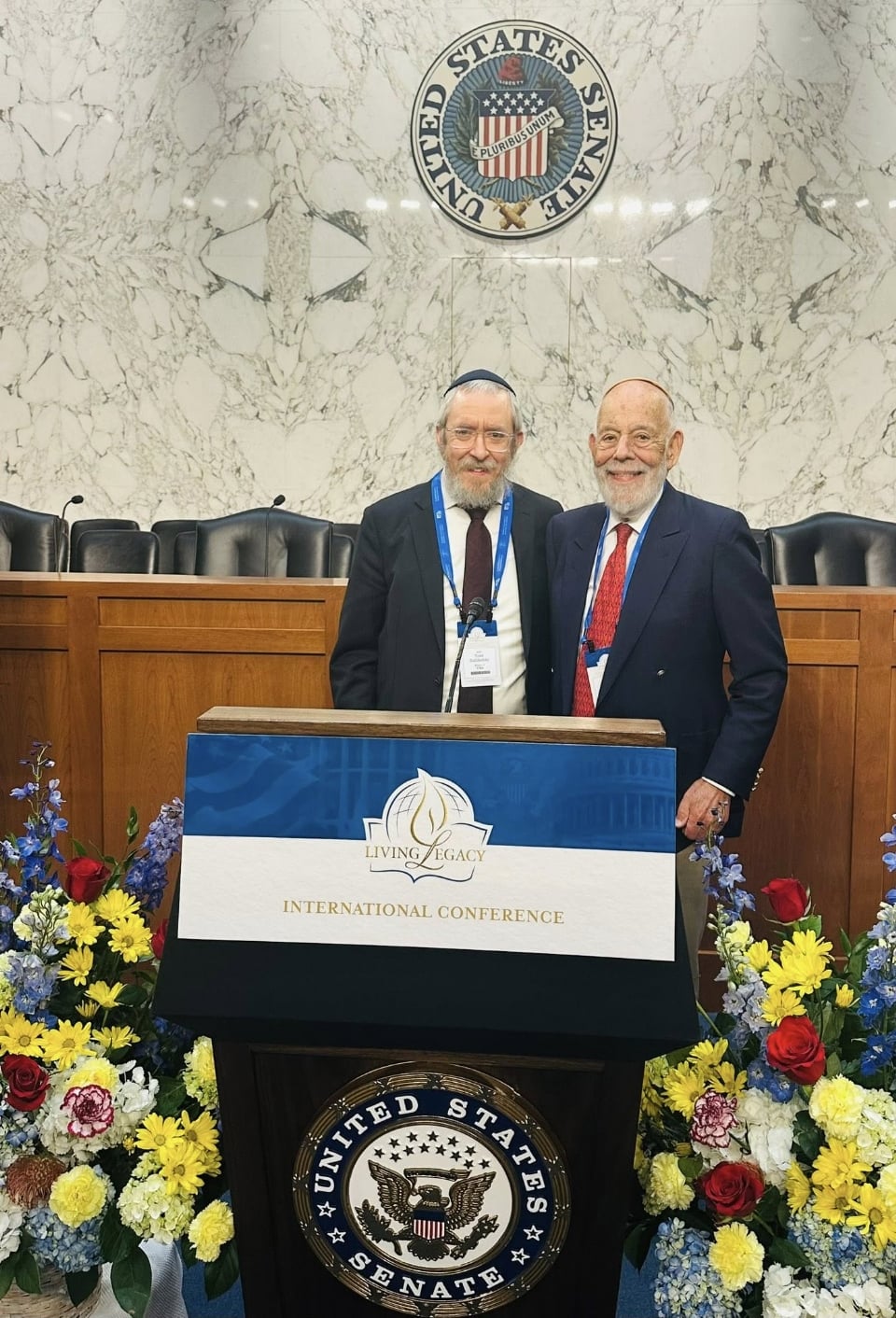
Like the women at the time of the giving of the Torah, she possessed a natural enthusiasm for Yiddishkeit. She took particular pride in seeing her children dedicate their lives as Shluchim (emissaries), fully devoted to the mission of the Rebbe and Rebbetzin. This weekend, as Esty and our daughters participate in the International Conference of Shluchos, that pride and joy feels especially present.

We will miss seeing her when we visit New York, and we will miss her visits to Bellaire, especially around Pesach. Her birthday fell on the first Seder night, and we always enjoyed making it special for her, memories we will always cherish.

We will strive to live by her example of faithlovepositivity, and quiet selflessness and to continue living lives that would make her proud.

May we very soon merit the day when G-d “will abolish death forever, and will wipe away tears from all faces.” Amen.

Is all the waiting time wasted?


We often feel frustrated by how much time is spent preparing for the moments that matter most.

Think about it. We can spend months planning a wedding that lasts only a few hours. Weeks preparing for a milestone event, a trip, or a celebration that comes and goes in a flash. Sometimes it leaves us wondering whether all that 'in-between' time was worth it, or if so much of life is simply spent waiting for the real moments to arrive.

Judaism offers a radically different perspective.

The first Mitzvah given to the Jewish people was not about belief, prayer, or morality. It was the commandment to sanctify time itself, by establishing the Jewish calendar. Our sages go so far as to say that the Torah could have begun with this Mitzvah alone.

Why?

Because Judaism teaches that time is not merely a means to an end. The preparation is not secondary to the moment. All of time is elevated by the purpose it serves.

We see this idea throughout Jewish life. When we give a minimum of 10% of our earnings to charity, it elevates even what we keep. When we recite a blessing before eating, it is not just that bite that gains meaning, but our entire relationship with food.

The Jewish calendar teaches the same lesson. While holidays occupy only a small portion of the year, they give meaning to all the ordinary days that lead up to them. The anticipation and preparation, none of it is wasted. Every ordinary day becomes extraordinary because it is moving toward something sacred.

Judaism is not asking us to escape life and wait for the big moments. It asks us to recognize that the journey itself is sacred.

This Wednesday, we mark 76 years since the Rebbe assumed leadership of the Chabad Lubavitch movement. The Rebbe exemplified what it means to see each moment as part of a greater purpose. Every moment of his was infused with meaning, direction and sacred intention. By following his example, we fulfill the very first Mitzvah we were ever given: to sanctify time, and through it, elevate all of life.

Can a Question Matter More Than the Answer?


I often think about the questions Jews have asked over the centuries.

Not the answers, but the questions themselves.

A question is never just a technical inquiry. It reflects a life, a moment, a struggle, and a set of values. When a Jew turns to Torah with a question, they are revealing what matters most to them in that moment.

Across history, rabbis carefully recorded the questions they were asked and the answers they gave. These exchanges were preserved in what we now call rabbinic responsa - some six thousand volumes spanning continents, cultures, and centuries.

Sometimes, a single question tells an entire heartbreaking story. A Jew imprisoned in Auschwitz once asked whether he was permitted to save his only son if it meant another would be killed in his place. The question alone opens a window into unimaginable pain, faith, and moral courage.

Other questions are far more ordinary, yet no less revealing. “Is this strange new breed of chicken kosher?” or “May someone buy half the seats in the synagogue and charge others rent?”

Each question, simple or complex, shows us how Jews lived, what challenges they faced, and how deeply Torah guided their daily lives.

What’s even more remarkable is watching how the sages responded, how they weighed facts, examined Talmudic precedent, and ensured that timeless Jewish values, like human dignity and responsibility, were preserved when facing situations no one had ever encountered before.

Does growing older mean growing jaded?


We typically begin life brimming with energy, curiosity, and a deep desire to make a difference. As we grow older, something subtle often shifts. With maturity comes wisdom and a sense of satisfaction in what we’ve achieved, but sometimes at the expense of youthful enthusiasm. Curiosity can dull, and we risk becoming a bit jaded.

Does growing up mean we must lose the innocence and vitality of our youth? Is it possible to mature without losing that spark?

Before the Jewish people left Egypt, G d empowered Moses to lead their redemption. In doing so, He referred to them affectionately as “My firstborn son, Israel,” a title that reflects maturity, responsibility, and purpose as a nation. Yet elsewhere, G d describes the Jewish people as His “youngest child” (Ki Naar Yisrael) a phrase that evokes the pure, unconditional love a parent feels for a baby. Anyone who has ever held a baby knows this kind of love, complete, instinctive, and untouched by expectation.

So which is ideal? The pure, unearned love reserved for a young child? Or the respect and closeness that come from growth, effort, and achievement?

Judaism’s answer is both.

True maturity is not meant to replace innocence, but to build upon it. Our wisdom and accomplishments should be fueled by the same sincerity, humility, and wholehearted devotion that defined our earliest years.

This balance is the key to a meaningful life: to live as G d’s “firstborn,” using our gifts to make a real impact, while remaining His “youngest child,” grounded in purity and faith. When we harmonize these two qualities, we do not age out of inspiration. We mature into it, carrying forward the same pure energy that first stirred us to want to make a difference.

Looking for older posts? See the sidebar for the Archive.