Printed fromJewishBellaire.com
ב"ה

Rabbi's Blog

Thoughts and Musings by Rabbi Yossi Zaklikofsky

What my newborn son taught me


We remain eternally grateful for the blessing of welcoming our new son, Levik, into the covenant of Abraham a few weeks ago, surrounded by family and friends at his Bris. And now, this week, we read about Abraham circumcising his son Isaac at eight days old, fulfilling the commandment G-d had given him.

The Midrash describes a debate between Isaac and his older brother, Ishmael, who had been circumcised at the age of thirteen. Ishmael argued that he deserved greater credit because he was old enough to understand what he was doing and chose not to resist. Isaac argued that having his Bris at just eight days old, before he could understand any of it, is even greater.

So who was right?

There is something uniquely powerful about Isaac’s bris. His connection to G-d didn't begin with a decision he made or an idea he understood. It was part of who he was from the very beginning.

That is the essence of a Bris, a covenant. Our connection to G-d and our place in the Jewish people are not things we have to earn. They are part of our identity, something that remains with us regardless of how much we know, how connected we feel, or what stage of life we are in.

And there is a lesson here that extends far beyond the Bris itself.

Sometimes we wait until we feel motivated to do something important. We put off a mitzvah until we understand its meaning or wait until we feel inspired to take the next step.

But the things that matter most in life cannot depend entirely on how we feel in any given moment.

A parent doesn't stop being a parent on a difficult day. A commitment doesn't disappear when our enthusiasm fades. And a relationship doesn't lose its value simply because we don't fully understand it or feel especially connected at a particular moment.

Of course, understanding what we do and finding meaning in it makes our commitments that much richer. We should always strive to learn, grow and deepen our connections. But we don't have to wait until we understand everything or feel ready to begin. Sometimes, the action comes first and the understanding follows.
Hero to the world, but what about your family?


We often admire people who make a tremendous impact on the world. They may be leaders in their fields, whose accomplishments touch thousands, sometimes millions, of lives. And yet, those admired by the world are not always as appreciated by those closest to them. Someone may devote enormous energy to helping people across the globe while overlooking their own family, or work tirelessly to improve the world while neglecting the community right outside their door.

Of course, we are encouraged to reach beyond ourselves and make a positive impact on the world. But what good is it to change the world if we aren't making a difference in the lives of those around us?

Here is a fascinating insight that speaks to this very idea. When G-d changed Abram's name to Abraham, adding the Hebrew letter hei, He declared that Abraham would become the father of a multitude of nations. Our Sages point out that even after this transformation, the letter reshremained in his name (unlike Sarah, whose name change involved replacing the yud with a hei). The resh is associated with Aram, Abraham's original homeland. His mission would now extend far beyond his origins, reaching nations across the world, yet that original letter remained.

The message is profound. Abraham was not meant to remain confined to his original surroundings, quite the opposite. He was destined to influence the entire world. But even as his reach expanded, his origins remained part of his identity. Growing beyond where you started should never mean forgetting where you came from.

This applies to each of us. We may move to new cities, build successful careers, and find opportunities to make a difference far beyond our immediate surroundings. But we must never lose sight of our responsibility to those closest to us. Our families, neighbors and local communities deserve our attention and care, first and foremost. And as we advance in life, we should remember those who helped shape us: our parents, teachers, mentors and the communities that invested in us along the way. We should never take their contributions to who we are today for granted.

Ultimately, the measure of our success is how far we go, how many lives we touch, and whether we remain connected to the people and places that made us who we are. True greatness means expanding our influence without losing sight of our roots.

Have you heard Barbara’s story?


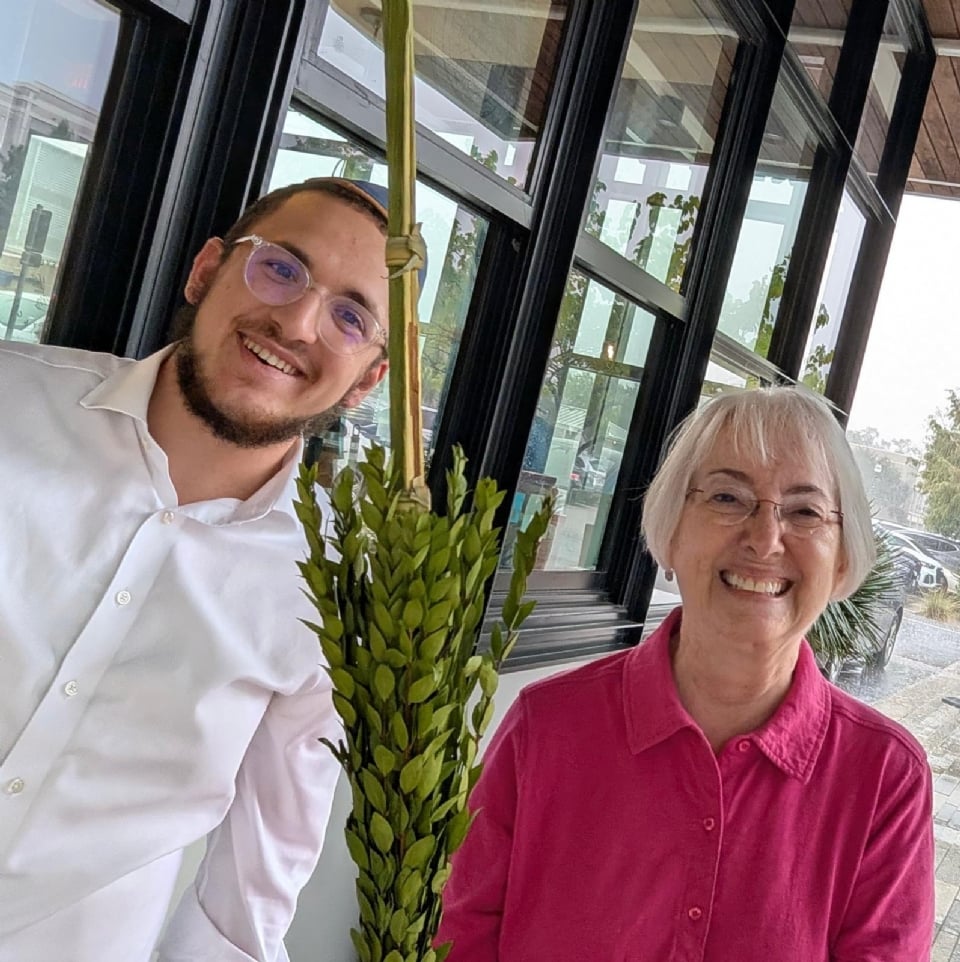
Over Sukkot, our son Mendel, my nephew Levik and their friends did a remarkable job bringing the Mitzvah of Lulav and Etrog to about 770 people. I want to share one encounter that captures the lasting impact of their work.

Mendel was outside a medical office on Bellaire Blvd. when a woman named Barbara approached and asked if he was offering blessings. “Yes, of course,” he replied. She asked if she could recite the blessing over the Lulav and Etrog, and proceeded to do so.

She then told him something remarkable. A few years earlier, she had been having tea outside with a non-Jewish friend at a nearby tea room when Mendel approached and asked if she was Jewish. He helped her recite the blessing over the Lulav and Etrog and explained its meaning and significance to her friend.

“I want you to know,” Barbara told him, “that ever since then, every year, I purchase Lulav sets and send them to my two children, one here in Texas and the other in Maryland.”

Think about that. One Mitzvah encounter, lasting a minute or two, inspired Barbara to establish a yearly tradition and share the Mitzvah with her children and grandchildren. We never know how far the ripple effect of a single Mitzvah will reach, or how many lives it may touch.

There is another lesson here. Barbara didn't allow the inspiration of that encounter to remain a beautiful memory. She turned it into an ongoing commitment, ensuring that the experience would continue to influence her life and be passed on to the next generation. It is one thing to feel inspired in a special moment, it is another to take that inspiration and make it part of our lives year after year.

And that brings us to where we are now.

With the holidays behind us, we are returning to our everyday routines. The 7th of Cheshvan marks this transition in the Jewish calendar. By this point, even those who had traveled from the most distant parts of the land to Jerusalem for the Sukkot pilgrimage would have returned home and the focus shifts back to daily life.

The challenge is familiar to all of us: how do we take the joy, inspiration and good intentions of the holidays and carry them into the months ahead?

Perhaps you had a meaningful moment on Yom Kippur, a thought you wanted to put into practice, or a renewed sense of Jewish pride and joy on Simchat Torah. Now is the time to turn that inspiration into action.

Begin acting on those positive intentions. Attend Shul more regularly, join a Torah class or register for our upcoming JLI course, take on a new Mitzvah, or find another meaningful way to deepen your Jewish life.

The holidays may be behind us, but the opportunity to build on their inspiration is just beginning.


Looking for older posts? See the sidebar for the Archive.