

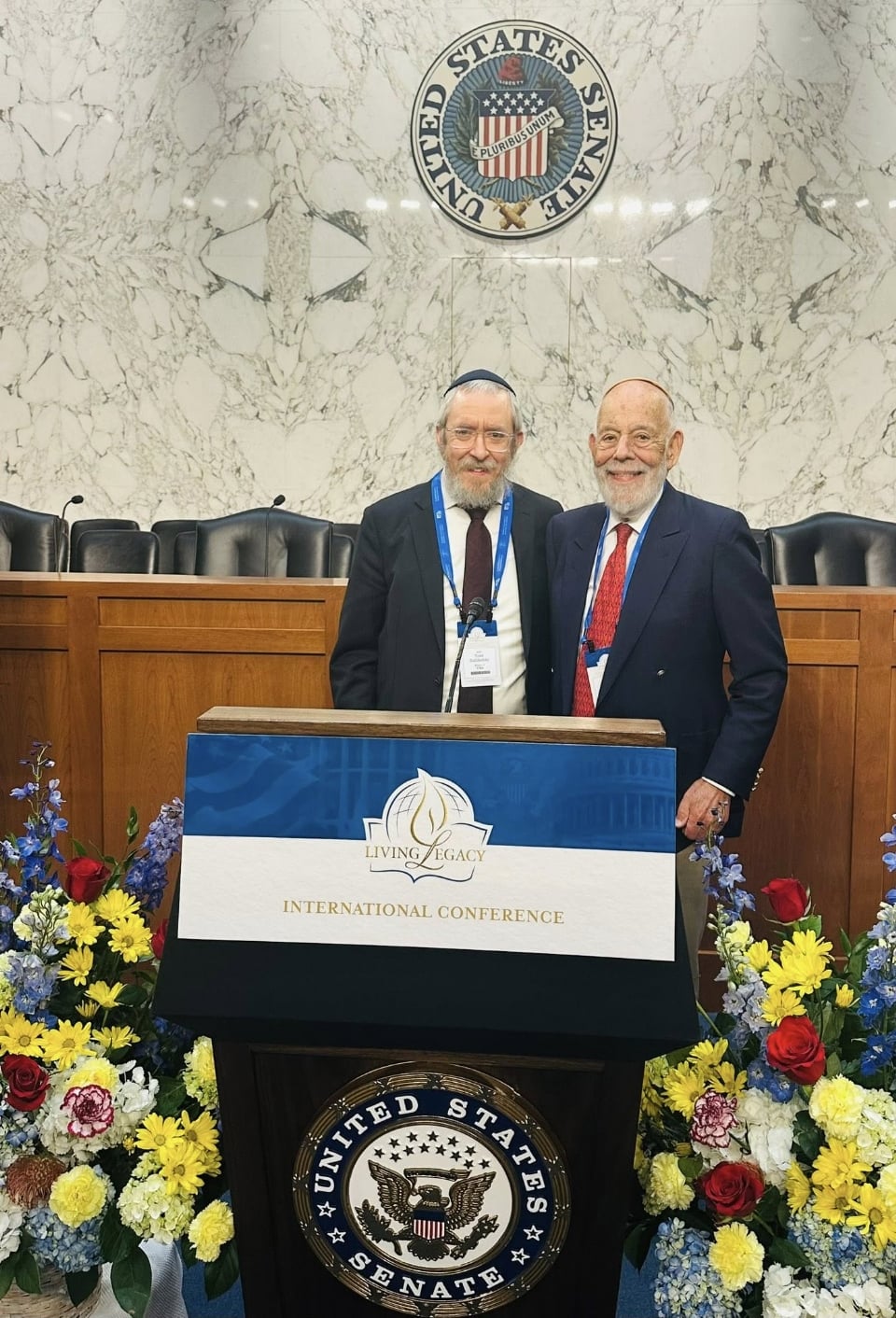
This week, I had the privilege of participating in the Living Legacy Conference in Washington, D.C., together with Dr. Larry Friedman ( some photos). The conference, held in advance of the Rebbe's 32nd Yahrtzeit, brought together rabbis and community leaders from across the world for several days of learning, inspiration and meaningful dialogue. Lawmakers, ambassadors, policy experts, and Jewish communal leaders shared valuable perspectives on the challenges and opportunities facing the Jewish people and Israel.
During a luncheon at the State Department, Israel's Ambassador to the USA, Yechiel Leiter, referenced an idea attributed to Viktor Frankl. In addition to the Statue of Liberty, he suggested, America should erect a Statue of Responsibility. Liberty is only half the story. Freedom achieves its purpose only when accompanied by responsibility.
The ambassador then said: The Rebbe did more than advocate for a statue of responsibility. He inspired generations of ordinary people to take personal responsibility for Jewish life. Responsibility for their own Judaism. Responsibility for their families, their communities, indeed every person within their circle of influence. Rather than building a statue, he built living, breathing people who feel responsible for one another and for the future of the Jewish people.
We actually study this very idea this week. When the Jewish people asked to send spies into the Land of Israel, G-d told Moses, "Send for yourself men." Many commentators ask: G-d always explicitly commanded Moses what to do. Why, with the spies, did He suddenly leave the decision in Moses' hands?
Perhaps the answer is that at a certain stage, a leader must do more than simply follow instructions. A leader must learn to think, to judge, to take ownership, and to assume responsibility. G-d was teaching Moses that leadership means more than carrying out orders. It means embracing the mission so completely that it becomes your own.
Thirty-two years after the Rebbe's passing, that remains one of his most enduring legacies. He challenged people not merely to follow, but to lead. Not merely to observe problems, but to take initiative. To invest their minds, hearts, and souls in strengthening Judaism and uplifting those around them through acts of kindness, inspiration, and Jewish engagement.
The question is not whether we are capable of changing the entire world. The question is whether we are willing to take responsibility for the small corner of the world that has been entrusted to us. If each of us lifts up our own corner, then together we can help bring the entire world closer to its perfection the Rebbe so longed to see.